navigation

Check out my 2022 Stories posts!
Showing posts with label 2022 Stories. Show all posts

June 6, 2022

Whispers of Wind: June 2022 Issue Table of Contents


Whispers of wind

stirred echoes

of the past

and scattered thoughts

of a different time and place

through her mind...

~ A. Bergloff


In nature, it is the wind that brings in storms, and it is also the wind that clears them away. Wind brings change, and there is beauty in the idea that through the worst storm, the wind will come and usher in the clear blue skies afterwards.

This month, EC is presenting four stories and four poems in the third issue in our series of "weather-works" for 2022 that explore some element of weather - from rain to wind to snow and beyond.

So, please enjoy, and as always dear readers...

Stay enchanted!
- Kate, Amanda, and Kelly

"The East Wind listens for the
ghosts of last year's sadness..."
Eve Morton
Hear your heart stop
in an ocean of silence...
Alexander Etheridge
She could speak with the spirits of
the dead during heavy rains...
The Stone Sister
Betty Stanton
All forest adventures
should respect nature...
in the Rain
Alicia Hilton

"I am a weather witch, and I would
reward each of you with a boon..."
Seasonal Affliction
Robert Allen Lupton
Elf tears do not suffice...
Climate Change
TS S. Fulk
"Who is with you
in your storm..."
Susan K. H. Newman
We fly together,
up into the light...
Jason P. Burnham
MUSIC
Sharing an enchanting
favorite to accompany this issue:

ALL COPYRIGHT
to the written works in this issue belong to the individual authors.
Enchanted Conversation
Editor-in-Chief Kate Wolford 
Contributing Editor & Artist ~ Amanda Bergloff
Special Projects Writer ~ Kelly Jarvis

Cover Illustration ~ John William Waterhouse
Graphics ~ Amanda Bergloff
If you'd like to see even more stories, poems, and articles in EC, please consider sponsoring us through Patreon. We have amazing rewards and every penny we receive goes to EC.

February 15, 2022

The Wolf and The Wind, By James Dodds


There once was a time when birds talked as well as sang, wells granted wishes, and rainbows spied out pots of elven gold. In that time, magic, both great and small, was commonplace among mortals adept enough to believe, understand and use it.


One such person, a woman named Phaedra, dwelt at the edge of the woods, just past the tilled fields of the village, in a cozy cottage nestled under a grove of ancient trees. The villagers sought Phaedra out for cures, love potions, warding charms and her mastery of “the sight.”


Phaedra’s mother was ailing. Phaedra packed a basket of food and remedies, some magical, some simple herbs. Turning to her child, she said, “Daughter, take this to your grandmother as quick as ever you can.”


Her daughter, Morgan, wise beyond her ten years, snatched her scarlet cloak and hood from the hook. “Yes, mama.” As she turned to go, Phaedra pressed a small whistle into her hand. “In case of trouble, use this,” she commanded. “But remember, your wits are your true magic.” Her daughter nodded. She stepped out onto the stoop, surveyed the woods surrounding the path and set out at a trot. Her mother watched the forest shadows reach after the girl, dark forms that melted back into the woods as the girl hastened past.


Morgan paused for breath where the path forked three ways. As she pondered her choice, a big wolf sauntered up. “Lost, are you?” he asked. Grinning, he padded around the girl in an ever-shrinking circle. Morgan fumbled about in her basket. The wolf stopped directly in front of her, his hungry yellow eyes all a-glow. The girl held up a morsel of meat long enough for the wolf to get a sniff, then tossed it into the air. The wolf leapt up and snap! went his jaws. Morgan pulled another tidbit out of the basket, flinging it even higher. The wolf eagerly devoured this one too. But the clever girl had fed him one of her mother’s poultice ingredients: a bundle of shredded horseradish root!


The bad wolf’s eyes and nose gushed rivers. He howled in pain and dashed away, desperately seeking water. Morgan raced up the middle path. As she scampered, her hood flew back, revealing golden curls that sparkled in the sunlight.


Presently she came across a little house with a thatched roof. The door stood wide open. Morgan slipped inside, quickly bolting the door after her. She whirled around to find… an empty room. No one was home. Three chairs huddled around the fireplace. Three beds stood under the back window. And three bowls of warm porridge rested on the table, issuing steam that shimmered in the air.


As Morgan leaned over to sniff the porridge, the door rattled violently against the bolt. Outside, the wolf snarled, “Little girl, little girl, let me in, let me in!”


Morgan’s sudden fright turned to anger. She marched to the door and firmly said, “No! You are a bad wolf! Not a tooth, not a whisker, not even a hair of yours shall enter this house.”


The wolf gnashed his large teeth in rage. “Little girl,” he growled. “I can blow the leaves off the trees. I can blow the tufts off dandelions from a mile away. I will blow this door down and then gobble you up in three big bites!” He marched ten paces back from the door and began to huff and to puff.


As the wolf raged outside, Morgan put her mother’s whistle to her lips. She waited until a high, keening wind buffeted the door. It shook against its hinges and the bolt quivered sharply in the bolt-hole. Taking a deep breath, Morgan blew gently on the whistle. Out of nowhere, a counter-wind smothered the wolf’s effort. She heard him grunt with surprise. Here’s a surprise, she thought. She tooted on the whistle and a sharp gust knocked the wolf head over heels. He yelped as his head struck a rock.


Twice more the wolf attacked and twice more the girl beat him back. The third time, she spun in a circle, blowing the whistle as hard as she could. A whirlwind descended on the wolf, picking him up and flinging him against a tree.


Morgan opened the door and peered out. The big wolf lay face down, groaning and gasping for breath. “Oh, Mr. Wolf!” she called. “You won’t be dining on me today, but there is some nice porridge here you might enjoy.” She skipped on up the path until she was out of sight. Wanting to see what the wolf did next, she ducked into the forest and crept back to the little house.


Not feeling at all big or bad, the wolf crawled into the cabin. Famished, he gulped down the porridge, licking the bowls clean. Exhausted, with a full stomach, he curled up on the biggest bed and fell fast asleep.


The girl was about to continue on to Grandmother’s house when three enormous shadows loomed across the path. She shrank back and fearfully watched a family of grouchy bears lumber past. Papa Bear grumbled about how hungry he was. Baby Bear couldn’t stop whining. Mama Bear cuffed Baby Bear and gritted her teeth at Papa Bear.


Snarling at each other, the bears shoved through the door. Silence fell as they gazed around their home. Crouched outside the window, Morgan felt their anger spiral up until Mama Bear saw the muddy wolf on her clean bedsheets and shrieked, “You filthy beast!” The hungry bears fell on the wolf and gobbled him up.


Shortly thereafter, Morgan let herself into her grandmother’s house. There, on the loom, was a half-finished love blanket, with the letters M O R already woven in. Grandmother sat up in bed and grinned at her daughter’s daughter.


“Oh Grandmother, what a big smile you have!” said Morgan.


James Dodds has been published in 2100: A Health Odyssey and The Avenue magazine. He bides his time on a quiet plot of land just west of Spokane, Washington. He collects original Oz books and never wavers in his search for the perfect fried chicken recipe.
Cover Image: John Everett Millais
Cover Design: Amanda Bergloff 

A Heart of Diamond, By Rachel Nussbaum


They say long ago when this land was still barren and dry, there was a girl who was born with a heart made of diamond. Her skin was like that of frosted glass, and as her mother gazed down at her daughter, she could see it clear as day. A diamond heart, shimmering as it pumped liquid gem blood throughout the newborn's body. The midwives and the clerics who assisted with the birth were awed by the sight, and word quickly spread. Soon, people all across the land knew about the little baby girl with a diamond heart. 


But word travels across all circles, good and bad. When bad men heard the stories, many of them spoke of finding the girl and cutting out her valuable heart. Whispers carried back to the child’s mother and father, who were very worried for their daughter. They prayed to the Gods in the Sun and the Moon to protect their baby girl. The gods heard the parent’s prayers, but gods have a reputation for being merciless and absolute, and the Gods in the Sun and the Moon were no exception. 


Gods are powerful, and although they could not take away or change the girl's heart because it was a part of her, they could give her the power to defend herself. They came down to the baby girl one night and they filled her with poison. 


“Her diamond heart is far too pure for her to ever willingly use this, even against those who wish to harm her.” The God in the Sun said. 


“Then we will give her sharp nails and teeth that will excrete the poison, and we will turn her skin into poison as well. And anyone who will touch her will die a horrible, painful death,” the God in the Moon nodded. 


So the little girl grew up, but as she grew, she changed. Her fingers split open into poisonous barbs, and her teeth grew into long fangs that dripped venom. Her skin became like sandpaper, coarse and sharp, every inch of it poison to the touch. 


The tears that poured from the girl's eyes when her mother could no longer hold her were poison. And the cold sweat that dripped from her pores as she rocked herself to sleep alone at night were poison. And she looked up at the sky at night and begged the God in the Moon to take the poison away, and she’d look up during the day and beg the God in the Sun the same, but the Gods couldn’t take away or change her poison because it was a part of her now. They turned their backs on the girl, content that if nothing else, she was now safe from the bad men who wanted to steal her heart. 

The bad men who came for her died, but so did her friends that reached out to comfort her, and her lovers who were desperate to hold her. She lived a life of sadness and longing, and she cursed the gods for afflicting her with a poison that took everything from her. 

One day when the loneliness was too much, the girl threw herself down into a stony creek, and she broke her neck on the rocks. And all that poison she was filled with trickled out of her eyes along with her tears. 


Yet even after death, even after rot, her tears still trickled out. And when they evaporated in the light of day and weighed heavy in the clouds above, those same tears rained back down to the lands, harder than any storm we’d ever seen. 


Finally free of the poison that plagued her tears in life, in death, the girl’s tears hit the earth far too pure to cause any harm. Instead they quenched the barren soil and breathed life into it. Soon grass grew, and then trees. Then forests, stretching for hundreds of miles, tall and full of life.


They say it’s the girl's spirit in her tears that makes the towering trees of this land twist to block out the Sun and the Moon, the Gods that cursed her and turned their backs on her. And they say that somewhere at the bottom of the swamp, her poisonless body still cries, cradling a heart of diamond no one ever knew.


Cover Design: Amanda Bergloff 

The Bird From Faraway, By Megan Baffoe


There once lived a maiden who wanted for almost nothing. She was kind and clever and beautiful, with thick curling hair and lashes like the wings of a bird. She slept every night beneath silk sheets on a feather-stuffed mattress, and in her tower-room there was all manner of books, an array of wonderful instruments, and a wardrobe full of gowns sewn so beautifully that you would gasp to look at them. But despite all this, her heart was very heavy; for her father, who provided all these things, had ensured that it was all she knew in the world. The room was inside a great tower of emerald, which lay behind thick walls of granite, and several iron doors. She never had a visitor, for fear they would take her away, so spent her days entrapped and mostly alone.


As the young maiden grew older, she grew more and more depressed. She stopped her reading, her playing, and her embroidery, instead spending all her time staring out of her solitary window. Her father had ordered gardens to be grown, thinking that the views would bring her pleasure, but they were more of a torment; she wanted desperately to be amongst the flowers, but could only make do with bouquets that her handmaidens gathered for her. Some of them dared to plead with their master, suggesting that his daughter was growing dangerously unhappy, but he was a hard-hearted man and ignored them all.


Winter that year was crueler than ever, and all the garden was soon buried beneath ice and snow; still, the maiden liked to look upon it, and think about being free. One day, as she was watching as she always did, she noticed a bird lying amongst the snow; it was brightly colored, and looked to be from a warmer place. It was lying quite still. When she saw the animal, the maiden entreated one of her servants to bring it into the tower-room, and they abided by her request. She was enchanted with the creature, and nursed and spoke to it all through the Winter. But once the crocuses began to break through the white again, and the Sun began to shine, the maiden had it released. The loss of her confidant made her weep, but she would never inflict entrapment upon another. Little did she know, her affections were returned; the bird was not just a bird, but a Prince of a faraway country, and he felt equally devoted to the maiden that had saved his life. 


Knowing of her desire to be free and amongst others, he returned often to the tower, bringing her flowers and fruits from foreign gardens, or trinkets from bustling market-places; but he could not take the maiden with him, although the two of them wanted it dearly. Seeing her sadness, and feeling his own, the Prince finally decided to consult a witch— a clever and formidable woman, that he had learnt of during his travels.


“If you wish to heal your maiden’s heart,” she instructed him, “you must prove yourself its match in devotion. The warm months have nearly left us; you must spend the colder ones with me. When the Snow falls, you will gather up all the flowers in my garden, and send them to your maiden with instructions to spin them into a gown for her to wear. When the garment is complete, she should put it on, and then you will have your wish.” The Prince’s men said that she was mad, and that flowers would barely grow in the Snow; but the Prince agreed to spend the Winter with her.


Her garden was larger than he had ever seen, with all manner of strange herbs and plants in it. She told him to ignore all those, however, and simply wait for the Snow. So, he did – and, you can imagine his surprise, that every time a drop touched the ground, from it sprung a cloud-like flower, with a silver stem all covered in thorns! They made a wondrous sight, but the Prince did not let his amazement deter him. Their thorns pricked him until he bled, and the weather turned his fingers first red and then purple with the cold; but every day, he gathered so many that he had to call upon many common birds, doves and crows and sparrows, to help deliver the flowers to the maiden.


She was amazed at the sight of so many birds, and more still by the strange flowers, and the instructions; but, desperate for her freedom, and suspecting now that her bird was much more than that, she matched her Prince in diligence. She and her hand-maidens began work at once, spinning a beautiful dress that was soft and sparkling as snow. When it was finished, she sent word back to the Prince with a dove. 


When he received the letter, the Prince hastened to the tower, stopping only to thank the witch, leaving her presents of gold and jewels. The maiden was waiting for him, and when she saw him in the distance, she asked that she be helped into her dress. Once on, the Snow-gown melted, and she with it; flesh became feathers, and she a silver bird, with wings that stretched as widely as the Prince's. And so, the tower could not hold her— the two of them soared out the window, free birds at last. They descended to his homeland under the light of the Sun, where they were pronounced King and Queen; and, still, the people say, sometimes you will see them flying together as birds, away to beautiful and faraway lands.

Megan Baffoe is an emerging freelance writer currently pursuing English Language and Literature at Oxford University. She is keeping track of her published work http://meganspublished.tumblr.com.

Cover Design: Amanda Bergloff 

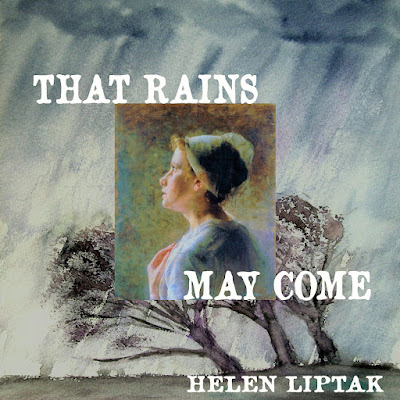
That Rains May Come, By Helen Liptak


Long ago in a far-off land Elizabeta Drominichka lived with her ailing mother on the edge of a starving village. For months rain passed them by as villagers sickened and died, picked off by famine, disease and thirst. Somehow Elizabeta kept herself and her mother alive by sheer force of will.


With her mother failing, her crops wilting and their pigs afflicted with the wasting disease, Elizabeta grew desperate enough to believe the old tale that the first eight drops of water presented by the New Year and gathered in a vial would stave off drought, famine and pestilence. But which eight raindrops are the first? And how to gather them?


Deciding she had nothing to lose by trying to harness the power of the stories, Elizabeta unearthed an old, cracked crystal vial. On the very first day in the new year, she left her small home to search the sky for any clouds that might bring rain. A week went by. Two weeks. Three weeks. The land remained as dry as her teacher’s heart while her mother coughed in her bed and the pigs dwindled to resemble paper cut outs, but Elizabeta persevered. Each night she returned home, exhausted and discouraged, but the following morning after her chores she set out again, receptacle in hand, scouring the skies for any small cloud that might contain eight drops of rain. Alas, it continued fruitless.


The villagers mocked and scorned her pursuit but Elizabeta refused to care. What harm was she doing? What other hope did she have for her beloved mother? She swallowed her sorrow instead of bread so as not to alarm her mother when she fed her the last of their supplies. She kept vigil for the desperately needed raindrops, watching the heavens, staying up late and rising early in her quest for showers. But it was as if the weather, too, made game of her.


One day as Elizibeta ventured outside seeking some sign of precipitation, a stranger rode up on an adorable gray-brown donkey. It was such a merry little beast Elizabeta forgot her trials to laugh with pure pleasure at its twitching ears and soft back. So caught up in admiring the donkey was she, that she hardly noticed the sharp faced lad on its back.


“What do you mean, staring so rudely at me?” the visitor snapped. “Do you scorn me like the rude villagers do?”


Elizabeta stammered her reply, “I-I did not mean to give offense. I was just admiring your steed.”


“That’s alright, then,” he answered. “He is the best donkey in the kingdom.”


“Certainly! The finest one I’ve ever seen.” Elizabeta did not explain that he was the only one she had ever seen.


The young man leapt off his mount, peppering her with questions while the donkey nibbled at the sparse grass. After a bit the he asked about the vial with its stopper. Elizabeta hesitated to try to explain her hopes and fears but the stranger was so persistent and so interested she finally told him her plan to gather the first eight drops of the new year.


“Must they be from here?” he asked.


Elizabeta didn’t know. The prophecy was none too clear on the finer points of geography so when the youth offered to take her with him on the donkey’s back to chase clouds farther away, she dared hope the drops could be from anywhere. With no thought for her own safety, she agreed to go with him to pursue a particularly promising cluster of clouds blowing toward the western border. The little donkey obligingly carried the pair after the darkening skies. The miles passed and the day grew late as they talked and sought the rain, until at last Elizabeta knew she must go home to care for her mother and find something to feed her pigs.


With no raindrops but a heart somewhat lightened by friendship, a sorrowful but determined Elizabeta returned to her house. When she thanked her companion and his donkey, he promised to fetch her again the next day. Each day they chased the promise of rain as the pigs grew thinner and her mother coughed and the crops wilted away to nothing, until one day the lad arrived to find Elizabeta slumped on the cottage step, trying very hard not to cry.


“What is it?” he asked.


“My mother will not last the night, my pigs are so thin, you can see through them and the crops are brown stubble. I have no strength to carry on.”


Her companion gathered her in his arms as tears began to leak down her face. To her amazement, he pushed her away and grabbed her crystal vial, unstoppering it to catch the first eight teardrops that escaped her eyes. Immediately, a gentle benediction of rain began to drop on the crops. The pigs shook off their lethargy to snuffle for mushrooms springing up in the damp. Her mother’s voice, stronger than it had sounded in ages, called out in relief. With a shout of joy Elizabeta jumped up and hugged her friend. Imagine her amazement to find the beggarly fellow changed into a handsome prince and his donkey into a noble steed.


She gasped in shock and stared, speechless.


“I am brother to the storm and cousin to the earth. I have the power to help those who put others first. You have sacrificed and striven, never once asking a thing for yourself. When your mother is well and your pigs fat and your crops ripe, I will return and take you with me to meet my family. Together we will return peace and plenty to our land.”


And they did.

Helen Liptak has written over twenty young adult comedy/dramas and three books. After living in six states and three countries, immersed in middle school culture for more years than she would care to mention, she now weaves her stories in South Carolina.


Cover Design: Amanda Bergloff 

SITE DESIGNED BY PRETTYWILDTHINGS