navigation

Check out my The Golden Age of Illustration posts!
Showing posts with label The Golden Age of Illustration. Show all posts

March 21, 2022

Women of The Golden Age of Illustration: Elenore Abbott, By Amanda Bergloff


The Golden Age of Illustration is a term applied to a time period (1880s - 1920s) of unprecedented excellence in book and magazine illustrations by artists in Europe and America. Advances in technology at the time allowed for accurate and inexpensive reproductions of their art, which allowed quality books to be available to the voracious public demand for new graphic art.


When many people think of the Golden Age of Illustration, Arthur Rackham, Edmund Dulac, and other male artists come to mind, but there were also female artists that excelled during this time.


Elenore Abbott was one such artist that produced exceptional work, so learn a bit more about her and her art below...

Elenore Plaisted Abbott (1875 - 1935) was an American painter, book illustrator and scenic designer and was one of the first women to illustrate Lewis Carroll's Alice's Adventures in Wonderland in 1907.


Elenore was born in Lincoln, Maine in 1875 and went on to study art at the Philadelphia School of Design for Women and the Pennsylvania Academy of Fine Art. She continued her education in Paris, France, at the Academie des Beaux-Arts where her art was exhibited. When she moved back to Philadelphia in 1899, she attended the Drexel Institute and was greatly influenced by artist, Howard Pyle, who was an instructor of hers there. During her career, Elenore produced illustrations for Harpers Magazine, The Saturday Evening Post, and Scribner's Magazines, as well as creating illustrations for books, such as Treasure Island, Kidnapped, Swiss Family Robinson, Louisa May Alcott's Old Fashioned Girl, Alice in Wonderland, and Grimm's Fairy Tales, among others.


A critic at the time, Evan Nadel Wolf, is quoted as saying in 1919 that, "Elenore Abbott loves her fairy tales, and no child who receives such a book will be disappointed..."


Elenore was also among a group of "New Women" - women who were freed from Victorian limitations, able to live and support themselves and be competitive in painting and illustration, which were artistic areas traditionally dominated by men. The field of illustration was one of the first business areas where some women even were able to earn more than men.


In her private life, she married lawyer and artist, C. Yarnell Abbott in 1898 and had a daughter, Marjorie, in 1907. The family moved to Rose Valley, Pennsylvania in 1911 where they lived until Elenore's death in 1938.


Elenore has come to be known as one of the most prolific illustrators of the Golden Age. Her art is beautifully fanciful with an enchanting use of color in her compositions.

Check out her work below:

The Two Brothers, 1920
Earthmen, Come Up, 1920
The Shoes That Were Danced to Pieces, 1920
Six Swans, 1920
The Beauty & The Beast, 1910

The Two Brothers, 1920
The Sleeping Beauty & The Prince, 1910
Book Cover, 1912
Indigo Dreams, 1910
The Wild Swans, 1920
"Now & Again I Stumbled"
from Treasure Island, 1911
Cinderella, 1920
from Alice in Wonderland, 1916
The Mermaid1922
Briar Rose, 1910

EC's contributing editor, Amanda Bergloff, writes modern fairy tales, folktales, and speculative fiction. Her work has appeared in various anthologies, including Frozen Fairy Tales, After the Happily Ever After, and Uncommon Pet Tales.

Instagram: amandabergloff 

Also, join her every Tuesday on Twitter for #FairyTaleTuesday to share what you love about fairy tales, folktales, and myths.
Also, if you like sharing your #vss fairy tales on Twitter, follow @fairytaleflash
If you'd like to see even more stories, poems, and articles in EC, please consider becoming a patron through Patreon. We have amazing rewards and every penny we receive goes to EC.

Article Resources:

– Elenore Abbott Art: Wikimedia Commons

– Elenore Abbott, Alchetron.com

– Elenore Abbott, Wikipedia

– Hub Pages, Elenore Abbott

Blog of an Art Admirer, Elenore Abbott

January 10, 2022

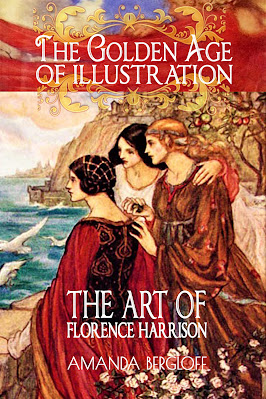
Women of The Golden Age of Illustration: Florence Harrison, By Amanda Bergloff


The Golden Age of Illustration is a term applied to a time period (1880s - 1920s) of unprecedented excellence in book and magazine illustrations by artists in Europe and America. Advances in technology at the time allowed for accurate and inexpensive reproductions of their art, which allowed quality books to be available to the voracious public demand for new graphic art.


When many people think of the Golden Age of Illustration, Arthur Rackham, Edmund Dulac, and other male artists come to mind, but there were also female artists that excelled during this time.


Florence Harrison was one such artist that produced exceptional work, so learn a bit more about her and her art below...

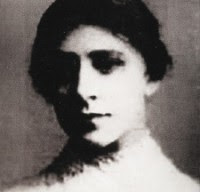
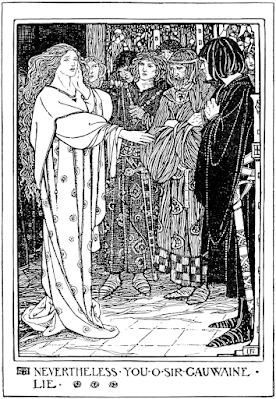
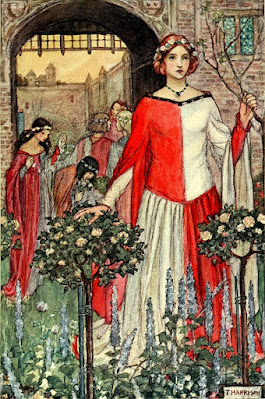
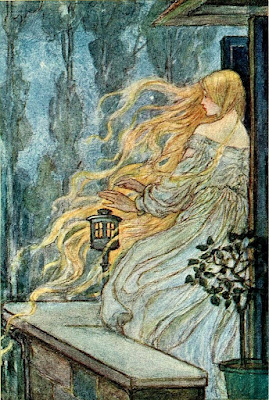
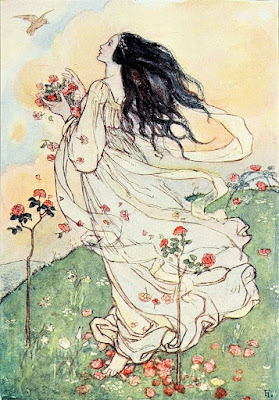
Florence Susan Harrison (1877 - 1955) was an illustrator of poetry and children's books in the Art Nouveau and Pre-Raphaelite style.


Born in Brisbane, Australia to Captain Norwood and Lucy Harrison, she eventually moved to England and lived there after 1922 until her death in 1955.


In 1905, her first published illustrations appeared in Rhymes and Reasons, from the publishing company of Blackie and Son. With the popularity of the book, Blackie and Son commissioned her art for several other books aimed at the expanding children's market of the time, including, The Rhyme of a Run, and In the Fairy Ring, both of whom were well received by the public and praised for their charming and imaginative illustrations, thus earning Harrison a high place among the illustrators of children's books at the time.


Blackie further commissioned Harrison in 1908 to illustrate a gift book for their Fine Art Series specifically designed for the adult market. Poems by the notable Pre-Raphaelite poet, Christina Rossetti, with Harrison's illustrations, was so successful that it led to contracts from Blackie for two similar volumes. Guinevere and Other Poems (Tennyson, 1912) and The Early Poems of William Morris (1914.)


During this time, Harrison also worked on her own collection of verse titled, Elfin Song, published by Blackie in 1912. Reviewers considered it an exquisite book, surpassing anything she had done up to that time with verse both romantic and magical, appealing to all ages.


After the mid 1920's however, Blackie no longer commissioned new assignments for Harrison, even though they continued to successfully recycle her previous works. In 1922, Oxford University Press commissioned her for their series of children's annuals published under the various Strang titles.


Although Harrison made her name with the brilliant jewel-like colouring of her works in the pre-Raphaelite genre, throughout her professional career she developed a more whimsical style needed to capture the imagination of a younger audience.


Harrison's art has been characterized as having an outstanding sense of composition and color with charming, repeated motifs such as apples, crows, fairies with wing spots that resemble those of a Peacock butterfly, elves, storm lanterns, and roses. Her art always takes me to an imaginative place for my mind to wander in.


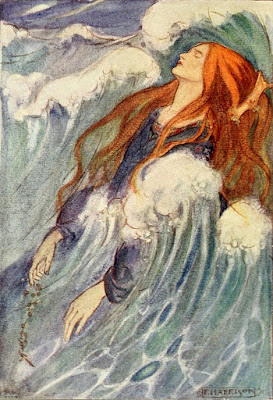
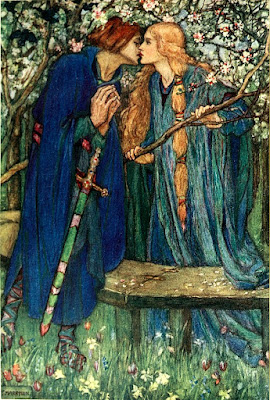
Check out some of Harrison's work below to enjoy her enduring legacy of imaginative and beautifully lyrical art.

From Poems by Christina Rossetti, 1910
From Early Poems of William Morris, 1914
From Elfin Song, 1912
From Early Poems of William Morris, 1914
From Poems by Christina Rossetti, 1910
From Early Poems of William Morris, 1914
From Poems by Christina Rossetti, 1910
From Early Poems of William Morris, 1914
From Poems by Christina Rossetti, 1910
From Early Poems of William Morris, 1914


Resources:

– Florence Harrison Art: Wikimedia Commons

– "Florence Harrison: A Case of Mistaken Identity," by Sandy Hargrove (December 2015)

– Florence Harrison, Wikipedia

– Florence Harrison Illustrations for Elfin Song, from Illustrations Art Gallery Blog

EC's contributing editor, Amanda Bergloff, writes modern fairy tales, folktales, and speculative fiction. Her work has appeared in various anthologies, including Frozen Fairy Tales, After the Happily Ever After, and Uncommon Pet Tales.

Check out her Amazon Author Page

Follow her on

Instagram @amandabergloff and

Twitter @AmandaBergloff

And join her every Tuesday on Twitter for #FairyTaleTuesday to share what you love about fairy tales, folktales, and myths.
Also, if you like sharing your #vss fairy tales on Twitter, follow @fairytaleflash .

Cover Painting: From "Early Poems of William Morris," Color Plate by Florence Harrison, 1914
Cover Layout: Amanda Bergloff
And check out
Enchanted Conversation's
and listen to the
Classical Music to Write Fairy Tales By
playlist for some writing inspiration!
SITE DESIGNED BY PRETTYWILDTHINGS