navigation

Check out my Bonus story posts!
Showing posts with label Bonus story. Show all posts

November 29, 2020

Bonus Story: The Singing Wings, by Maxine Churchman


Editor’s note: I love how Maxine used the simple tone of fairy tale writing, while dealing with complex ideas and feelings about motherhood and childhood. And she has a very interesting take on wings! This bonus is an early holiday gift to readers from EC. (KW)

When the king declared his betrothal to the beautiful maiden from over the mountains, some were dubious of the match. However, all who witnessed her radiant smile and silken hair on the day of the wedding fell in love with her. There was much celebration in the land, and everyone eagerly awaited the news of a first-born child. As time went by, and no announcement was made, many spoke out against the queen and her lowly origins. Everywhere she went, she saw unhappy faces and shaking heads.

She took to walking alone in the Great Forest behind the castle grounds. One day she heard someone singing. Their beautiful song brought joy to her heart, so she followed the sound until she came to a shady glade next to a beck. An old woman, surrounded by birds and animals, was seated upon a large moss-covered rock in the centre of the clearing. It was her voice the queen had heard; it soared and fluttered, weaving sunlight and wonder throughout the glade and beyond.


The queen stepped out from the trees. Immediately, the birds and animals scattered and the old woman stopped singing.


“Good morning, grandmother,” she said. “Your song brought great joy to my broken heart.”


The old woman smiled and bade her sit a while to rest her feet.


The queen sat on a flat rock, next to the old woman, and the thick moss moulded itself to her form creating the most comfortable seat imaginable. She ran her hand over the soft cool surface. “I should gather up this moss to make a cushion for my throne.”


“It would soon dry out and crumble; this is where it belongs. Things should stay where they belong if they wish to thrive.”


These words stung the queen and she glared at the old woman. She wished she had stayed on the other side of the mountains and thought her subjects felt the same way, but none had been so bold as to say so. She stood to leave.


“Fear not my queen; you will have a baby soon. A very special baby.”


The queen was greatly troubled by the old woman’s prediction and hurried from the clearing before she could say more. There were old stories of a fairy who had been banished to the forest, many years ago, for trying to steal a royal baby. Could the old woman be that fairy? She told the king about her meeting and vowed never to enter the forest again.


A year later, the queen gave birth to a daughter. Everyone rejoiced and the celebrations went on for a whole month, but the queen worried about the old woman’s words. How would her daughter be special? Would she be safe? She had the princess guarded night and day.


When the princess turned one, the queen noticed strange growths on the child’s back. Each day they became more prominent until it was obvious she was growing wings. The queen called for the royal surgeon to remove them, but even his sharpest blade could not sever them.


The king was perplexed. “Does it really matter? She is still our daughter and we love her just as she is. Isn’t that all that counts?”


But the queen was distraught. “How can we keep our daughter safe if she can just fly away?”


“We could tie a silk string to her wrist so she could not fly far,” he suggested.


“Like a kite?” The Queen was outraged. “She will be called a freak and it will be my fault. Everyone will hate me again.”


The king didn’t like to see his wife so unhappy, so he sent his men to find the old woman. Perhaps she would be able to help. After all, the king was sure she was indeed the fairy of the forest.


The queen kept close to her daughter as the old woman inspected her wings, lest she try to steal her.


“I can remove the wings, if that is what you really want,” the old woman said. “But you must keep the wings safe; the princess will need them one day.  When that day comes, you must allow her to visit me in the forest.”


The queen would never allow her daughter into the forest, but the King accepted the terms and the old woman rubbed a lotion on the wings. After a few moments she plucked them from the child’s back leaving nothing but two small marks. She conjured a large flat box and placed the wings tenderly inside.


“Why is the box so large?” asked the queen.


“So the wings have room to grow. Look after them well and let them out from time to time.”


The queen locked the box and pushed it under the bed. She would like to burn it, but was terrified it would harm her daughter.


As the years passed, the queen thought about the wings less and less. The princess grew to be pretty and adventurous. Although she was not allowed out of the castle grounds, there were still plenty of places to explore and lots of trees to climb. She searched for frogs in the pond but although their raucous noise suggested a large quantity dwelt there, she rarely spotted any.


When the princess turned twelve, she asked her mother if she could explore outside the castle grounds for a change. The queen said no: terrified she would get lost or be stolen. The defiance in her daughter’s eyes did not escape her notice and she doubled the guards protecting her.


To ensure her safety, the queen had a tall tower built in the garden. It had only one small entrance and the first ten floors had no windows, just a spiral staircase winding up the centre. Five sumptuous floors with tiny windows topped the tower and it was in these rooms the queen locked the princess. No one was allowed in except the king and queen. Two soldiers guarded the entrance at all times.


With the princess locked in the tower, the queen relaxed. As the years passed she felt more and more confident the princess would be safe and never leave her.


One day, she became curious about the wings. She had not seen them since they were removed. She secured the door and windows of her room and, for the first time since it was hidden under the bed, she pulled out the large box. The golden key was on a chain around her neck and she slipped it into the lock.  Opening the lid just a crack, she peered inside. It was too dark to see so she put one hand in and felt soft feathers. Pressing firmly down on them, she opened the box fully. The wings filled the box. The feathers looked dull and lifeless but she tied a silk ribbon to the bony extrusion on each wing before letting them go. They didn’t move.


Fearing she had allowed the wings to die, the queen gave the silk ribbons a sharp tug. The wings lifted ponderously into the air and over to the window where the sun was streaming in. They fluttered and stretched as though soaking up the sun’s warmth, and as they did, they began to change colour. The flat brown feathers plumped up and turned golden. The wings flew around the room, flapping ever more strongly until they were causing a powerful wind that took the queen’s breath away and ruffled the soft furnishings. She held the ribbons tightly and feared she would be pulled off her feet. The wings stopped near the window and beat against it until the glass broke. Seeing what was happening, the queen tied the ribbons to a bed post so the wings could not escape. They strained at the end of the silk and began to sing as the breeze from the window caressed their feathers. The song had no words, but the tune held the queen enthralled and made her cry: it was so sad and beautiful.


When she felt she could cry no more, she pulled on the ribbons. The wings came to her without protest and she locked them in the box and pushed it under the bed. Her heart was beating fast and she vowed not to open the box again.


In the tower, the princess had lots of toys and books to amuse her, but she spent most of her time looking out of the windows. From her high vantage point she could see the tops of the trees that made up the forest. They stretched for miles towards the horizon. In the other direction, far across the plains, she could see the pink and purple mountains. 


Just outside, birds soared overhead and flitted in the trees. She envied their freedom and ability to fly. How wonderful it would be to float across the sky and dive through clouds.


Below, she could see people going about their daily business, but she was too high to hear or speak to them. It was a sad and lonely existence. At night she wished on the stars and tried to sing to the moon, although her voice reminded her of the croaking of the frogs in the pond.


The evening before her sixteenth birthday, when she was feeling particularly low, she heard beautiful music. There were no words to the song, but the tune evoked feelings of sun on her face and wind in her hair. That night she dreamt of jumping off the roof of the tower and flying all the way to the mountains.


During that same night, a fire broke out on one of the lower floors. The tower acted like a chimney, drawing the flames up to the living quarters. With no windows in the lower section, no-one saw the fire until it had taken hold and become too fierce for anyone to use the stairs. The princess was trapped.


Loud crashing noises in the tower below woke the princess. She smelt the smoke and felt the heat from the flames. Terrified, she made her way up to the roof. She could see that no rescue was likely. She started crying and praying to the stars above.


The king and queen stood by the tower, wringing their hands and begging someone to rescue their daughter. The townsfolk threw water at the fire, but it was too high and hot for their efforts to be effective. No ladder was long enough to reach the princess. Everyone feared the worst.


On the roof, the smoke billowed making the princess cough and her eyes stream. There was nowhere for her to escape the intense heat of the fire. It would be better to jump and end it all quickly. She closed her eyes and stepped towards the edge.


The fairy from the forest shook the queen’s elbow. “Release the wings,” she shouted above the commotion.


The queen pushed and shoved her way through the crowd and arrived in her chamber out of breath. Tears of frustration streamed down her face and she prayed she would not be too late to save her beloved daughter. With clumsy fingers she put the golden key in the lock. As soon as the lock was released, the wings burst out of the box, knocking the queen over. They flew through the open door, their song dark and haunting.


The princess could hear singing. There were no words to the song, but the tune was urgent and fearful. It sounded so loud and close. She opened her eyes. Through the smoke and her tears she saw a golden bird swooping around the tower. The heat of the flames blackened its feathers, yet still it came and still it sang.


As it flew beneath her, the princess jumped. The ground raced towards her sending her stomach into her throat. She felt the bird touch her shoulders. Pain seared her back as the wings reattached and took her weight. Wonder flooded through her as she felt the strength and power of the wings and realised she could control them. She took several powerful downward sweeps that sent her high into the sky. She kept pumping her wings until the air grew thin and the ground disappeared behind a thin layer of cloud. She swooped and soared, rolled and spun, elating in the freedom and the cool night air on her skin. She sang to the moon of freedom and flying: her voice now was beautiful and clear. At last she flew down to the castle and landed next to her parents. They embraced and shed many tears of joy and relief.


The fairy of the forest spoke. “Princess, the Fae Folk lent you to your parents, now you must learn how to wield the magic you possess. I will teach you if you will come with me into the forest.”


The princess was delighted, she longed to explore beneath the canopy of the vast forest. She looked at the queen expecting her to disapprove.


The queen took her hands. “I nearly lost you tonight because of my foolishness. Go if you wish, but please promise you will return to me often.”


The princess gladly agreed to return, she could not imagine a life without the love of her parents.


“Your first lesson, princess,” said the fairy as she threw back her cloak, will be how to fold your wings so they don’t show.” She unfurled two magnificent purple wings and held her hand out to the princess. “Follow me.”


***

Bio: Maxine Churchman is a mother and grandmother from Essex, UK.  Her hobbies include reading, hiking, yoga, and, more recently, writing. So far she has concentrated on short stories, but hopes to make progress on a novel in 2020 and beyond. She has had work published by CafeLit, Black Hare Press, Stormy Island Publishing and Clarendon House Publishing. She blogs at Cccmaxine.blogspot.com


***

Image is The Fair Face of a Woman, by Sophie Anderson.


***

P.S.: For those of you viewing on full desktop, I’m working on the paragraph spacing. It might take a day or two. Sorry. KW


October 14, 2020

Bonus Story: Fallen Angel, By Henry Herz


Editor’s note: This light-hearted, funny take seemed like a perfect bonus story, and here it is. Henry’s mashup of “The Pied Piper” and one very hungry angel will lighten and brighten your day. Enjoy!


Pride and gluttony led to my fall from Heaven, but that is a tale for another time. Retaining my white wings proved a mixed blessing, as keeping them hidden quickly grew tiresome. I walked the Earth alone, posing as Evangeline the minstrel-mage. I traversed rarely trodden trails to astound audiences and, more to the point, to collect their coins with my spellbinding music, storytelling, and spell casting.


A chill wind blew, stinging my ears and tingling my fingers. I pulled my multicolored mantle tighter about my shoulders and tucked-in wings. Onward I trudged, following the lowering sun westward.


I topped a gentle rise and spied a distant but welcome sight—a small town, its far edge nestled against a dark green wood. Wisps of smoke from hearth fires beckoned. Ah, a chance to warm my chilly hands, rest my weary feet, and fill my empty belly, I thought. I could really go for a curd-smothered beef round between trenchers with a side of fried fingerling potatoes. But there's got to be a catchier name for that ... Encouraged by the prospect of sleeping on a bed rather than al fresco on unyielding earth, I marched without pause, reaching the hamlet before sunset. The peasants seemed pleasant enough, and I obtained without difficulty directions to the only inn. I strolled toward the central square, navigating narrow alleys lined by the wattle and daub buildings common to this province.


But I soon discovered this was like no other town I'd ever before beheld, for the villagers wore blue bretona birds on their heads like living hats! Being winged myself, birds held a special place in my heart.


The birds sang sweet songs. The villagers primped and played with their precious pets.


How odd! This place is for the birds. Hunger outweighed my curiosity, so I held in abeyance my questions about their feathered fedoras until I reached the thatch-roofed inn on the square. There I discovered that the innkeeper wore more than one hat, as they say, also serving as the mayor. I spent the last of my well-earned coins to secure dinner and a modest room for the night.


“I'll have a curd-smothered beef round with fried fingerlings,” I told the barkeep.


“A number seven!” he called to the kitchen. “Would you like an ale with that?”


***


I sighed contentedly after filling my belly. Tomorrow, I'll need to fill my purse. I yawned, eschewing the rustic evening entertainment scheduled for the common room, and climbed the rough-hewn wooden steps to my room. Miffed by the absence of a mint on my pillow, but exhausted by the day's exertions, I blew out the sputtering candle and sprawled on the straw-filled mattress.


***


I dreamt of traveling in style and comfort via a four horsepower luxury chariot. Intermittent slurping sounds woke me. I opened an eye. Beams of moonlight peeked through the curtains, softly illuminating the room. Spying nothing amiss and too tired to spare the noises any further thought, I fell back asleep.


***


I rose in the morn, refreshed though still sore from days of hiking. I longed for a chicken coop of fried eggs, a pigpen's worth of bacon, and a hot spring of coffee. But my empty purse dictated a different plan.


Tightening my belt, I resolved to remedy the situation by finding a suitable spot on the square to play for passersby and pass the hat, as it were. These rustic folk are probably starved for good music. Ugh, I've got to stop thinking about food.


I stepped outside and breathed the fresh morning air. But villagers scrambled helter-skelter in alarm like pheasants fleeing a flushing spaniel. For an overnight onslaught of scaly vermin now disrupted the harmony of the pastoral village. Who will toss me a coin now? I wondered. I'll have to don my thinking cap.


“Pestiferous niblings dug up my flowers,” complained one villager, pointing.


“You don't say?” I replied, having previously encountered such rodents of unusual shape in my travels.


“They snuck into cupboards and ate our berry scones,” cried another.


“Is that a fact?” I responded. That explains why they smelt of elderberries. My stomach growled, but my brow smoothed as a pecuniary opportunity percolated in my mind. Percolated? Stop thinking about breakfast!


“They gnaw my toys, and snurfle while I sleep,” wailed a small boy.


Hence the strange sounds last night. I nodded with empathy. Yet of all the niblings' offenses, the villagers deemed most egregious the torment of their bretona birds. For the tree-climbing niblings gave the birds no respite, chasing them from roosting spot to roosting spot, whether for play or as prey I could not say.


As the tally of complaints multiplied, the mayor strode into the square, huffing and puffing, shouting and pouting, but in no way improving the situation for his folk. He frequently fiddled with a large, lavishly plumed bretona bird perched atop his head. I've traveled enough to know a nincompoop when I suffer the misfortune of meeting one.


The grievances grew, and when he could countenance no more, the mayor stamped his feet. “Mifflestones! This will not do.”


Incompetent and irritable. I mentally doubled my de-infestation fee. “I am Evangeline the minstrel-mage. I can help,” I said to the mayor, throwing my hat into the ring, so to speak. I bowed my head with more manners than were due the backwater bumpkin.


The mayor did not reply. Instead, he ordered the villagers to build cages, weave nets, and set traps.


The indignities I endure to earn a meal. He lacks the courtesy to reply, the wits to solve the problem, and the humility to seek aid. He should hang up his hat as mayor. Biding my time, I made myself comfortable as a spectator. This will be entertaining.


The milking of animals, the planting of crops, and other daily routines ceased. But all to no avail. The pestiferous niblings dodged and evaded. The cages, nets, and traps remained empty. Shoulders slumped as the villagers resumed their regular duties.


The mayor's face reddened.


I stood. “I am Evangeline the minstrel-mage. I can help. Ridding towns of their troubles is old hat for me,” I said, pointing at a nibling preparing to nibble on a dozing dog's tail.


The mayor glared, but approached nonetheless. “What will my townsfolk think of me if I let a stranger solve our problems?” he replied rhetorically in a whisper, tilting his head toward the square.


I smiled, saying nothing. That you are not a prideful fool. Instead, you make clear that you possess the wits of a donkey's back end, but with less aesthetic appeal. I sighed. Oh, the indignities I endure to earn a meal. He won't be able to pull a solution out of his hat. Sooner or later he will bow to the inevitable and hire me. I mentally tripled my de-infestation fee.


After a pause, the mayor's face lit with an idea, possibly a rare experience for him. “Let us loose our woolyfloof herd to chase off the pestiferous niblings!” he cried.


At the drop of a hat, the dutiful villagers again ceased the milking of animals, the planting of crops, and other daily routines. They drove the woolyfloofs from their split-rail pens.


But the pestiferous niblings, while small in stature, possessed the tenacity of terriers. They bared their fangs, swiped with their claws, and snurfled most defiantly.


The larger but timid woolyfloofs bleated and fled pell-mell. Or was it helter-skelter? Higgledy-piggledy? I can never keep those straight.


The niblings resumed their depredations, while hapless villagers scrambled to recover their errant livestock. 


“Wobius!” they cried. “When shall we be free of the pestiferous niblings?”


Third time's the charm. “Shall I rid you of these rodents?” I hailed the mayor, spreading my arms.


Emotions played out on his face like a stage performance. Eventually, he grinned, which I found strangely disconcerting. “Very well. Name your price, minstrel.”


“I shall wipe out your pests in exchange for ... cue dramatic music ... your bretona birds,” I said, pointing at the one perched on his head. My fame would soar as the only minstrel this side of the Great River with a personal gaggle of bretona birds. Or was it a convocation? Parliament? Regardless, in a pinch they could serve as lunch. There I go again, thinking about food.


The mayor's eyes bulged, his fists trembled, and his face reddened further, if that were possible. With a visible effort of will, he gradually regained his composure. “A moment,” he sputtered, storming to the center of the square.


Townsfolk crowded round the mayor. They argued in heated whispers, casting glances at me. A lengthy debate ended with the mayor having the last word, a polysyllabic one at that, incrementally raising my estimate of his intelligence.


He approached me and doffed the bird from his head, cradling it with affection. “We cannot abide the pestiferous niblings. But bretona birds are cherished pets, dear to us as children. Will you accept a hogshead of pike as payment?” he asked, hat in hand, you might say. “Our pickled pike are the pride of the province!” he proclaimed.


I tilted my head but did not reply. That was far too low a price to dignify with a response, and in any event, fish, like this fool before me, tend to stink after a couple of days.


The mayor furrowed his brow. “How about a mule and cartload of woolyfloof milk, butter, and cheese? Is that not a valley of plenty for a humble bard?”


“Hmmf,” I grunted, scowling. A better offer, but still too stingy.


The mayor glanced back at the villagers, stared at his feet, and finally sighed in defeat. “Five splendificant rubies, the size of which are seldom seen?” he offered, touching the leather pouch at his belt.


The villagers gasped.


Now that's a horse of a different color. “Agreed. I shall face the mighty horde,” I declared, making the task sound far more daunting than it actually was. “Clear the square,” I shouted to the townsfolk with a grand sweep of my arm. The cut of my cloak rendered such gestures très dramatic.


The villagers' faces brightened at the prospect of the niblings' imminent removal. They hastened to comply. Many held their breath. A hush fell.


I strode to the center of the square and drew my sorciful flute with all the theatrics I could muster. I traced an orniculous symbol in the air. That would not aid my casting, but wizardry is 50% showmanship. I raised the instrument to my lips and played a dulcet canticle, followed by Bourée. The latter is not part of the spell, but the melody is always a crowd-pleaser.


At once, the niblings desisted their digging, forsook their foraging, and stopped their snurfling. Instead, they swarmed about me, drawn to the sweet sounds like hummingbirds to honeysuckle.


The villagers' eyes widened, their mouths agape.


I led the bespelled beasts out of the village, through shadowy woods to a distant glade. There they stayed.


I hummed a tune for my own amusement as I skipped back to the village, savoring the prospect of a lavish luncheon for their savior. The anticipation of a full belly raised my spirits considerably. But it turns out one should never count their birds before they hatch. Hmm. That's a catchy saying ...


“Huzzah! Hurray!” cheered the villagers. “Hats off to Evangeline!” They leaped and wept. They danced and pranced. They wirbilated in harmony with their beloved birds.


“The niblings shall vex you no more,” I declared. Cue dramatic music. “Now, fulfill your oath.”


“What now?” the small boy whispered to the mayor, unaware of my keen hearing. “You knew we had no rubies.”


The mayor turned to me. “Well, I um ... misspoke. Alas, we have no gems,” he said, holding up empty palms.


“Yet you kept that under your hat,” I growled. He suffers from pride and greed.


“How about ten woolyfloofs?” asked the mayor, pointing at a pen.


“That was not our accord,” I declared, putting my hands on my hips. “Beware. I will brook no betrayal. I wield great power.” … And responsibility.


“No one threatens me,” growled the mayor, clenching his fists. “Certainly not a white-haired mottle-mantled piper. The pestiferous niblings are gone. You may have woolyfloofs or nothing.” He turned and marched off.


He defrauds and derides me? I'm a friend of humanity, but even I have my limits. My face flushed.


The faithless villagers retreated from my baleful glare.


I would have swept out my flaming sword and separated his duplicitous head from his shoulders, but that sort of thing is frowned upon these days as too wrathful. Nor does it tend to encourage attendance at my musical recitals ... except by the teenagers, that is.


Again I drew my sorciful flute. I tapped a tree trunk two times and trilled a 'taliatory tune. The bretona birds flocked to me. Again I trod toward the tenebrous trees.


The villagers gasped. “Wobius! What have we done?” they cried at the sight of their poultry in motion. They wailed and flailed to no avail. For they would never again behold their beloved birds.


Far from the village, but no longer alone, I composed a new tune and sang with my flock. Or convocation? Parliament? In any event, it began thusly:


“If you fail to play it straight, you'll no longer wirbilate.


So, pay the angel, heed your words, and you won't lose your cherished birds.”


***


Bio: Henry Herz is the traditionally published author of 13 speculative fiction adult short stories, 11 children's books, and 3 children's short stories. He edited the dark fantasy anthology, Beyond the Pale. He blogs at HenryHerz.com


***


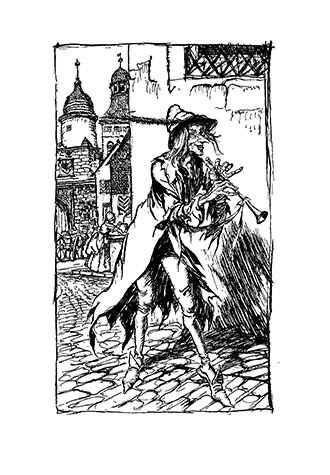
Image is The Pied Piper, by Arthur Rackham.


August 24, 2020

Bonus Story: The Wife That Never Was, by Teika Marija Smits


Editor’s note: You weren’t expecting a bonus story, were you? I’m full of surprises, what can I say? This story takes “Bluebeard” and twists it into something I never would have anticipated. It’s a truly fresh take. As for the “bonus story” process, its details will remain mysterious, except for me to tell you that you can’t apply for it or query for it. It just happens.


Life had come to Bluebeard’s castle, or so it seemed. All the servants remarked on it. There was a”‘something” in the air. A sense of a new beginning. Joy, even. This was due to the latest bride, Bluebeard’s seventh wife, Ziva.


My, how exquisite she was! Every being who looked upon her ecru skin and sable hair felt their heart throb within them. Even Bluebeard, who thought himself unmoved by human beauty. Ziva reminded him of his youth, of long-forgotten days when his soul was pure. When he, too, was numinous, and one of God’s beloved servants, carrying out His heavenly work. But dwelling on his past—on what might have been—was bittersweet. So he put those memories away and considered the future. He found himself salivating at the prospect of his first trip away; of his return to the wide-eyed Ziva who, with trembling hands, would return to him his set of keys. The littlest, most ornate key—the key to the forbidden room—would be bloodstained, proving her guilt. And he’d rage and roar, his body thrilling with murderous anticipation, while she quivered before him, a little lamb, an innocent doe, unable to escape the huntsman’s knife.


Yet when he returned, Ziva’s hands did not tremble when she returned his keys. His eyes sought out the littlest key. To his great surprise, and disappointment, it was not stained with blood.


Ziva put her soft, cool hand to his cheek. “I’ve missed you, Husband.”


Bluebeard, lost for words, allowed himself to be led to the divan and plied with drinks and fruit and questions about his trip. As he gazed upon his beautiful bride he couldn’t decide whether to laugh or cry.


***


Later that night, when his wife was asleep, Bluebeard crept to the forbidden room. On entering the bloody chamber, he was immediately aware that something was wrong. One of his dead wives was missing. She was utterly gone. Not a scrap of hair or flesh or clothing remained. He roared with fury, grabbing at the bodies of the other dead wives, begging them to tell him where she was. They merely hung there, mute.


Bluebeard once more studied the littlest key, but there was not a speck of blood upon it. And the key never lied. So how had Ziva done it? He considered confronting her, knife in hand, but then decided against this. There was little pleasure to be had from an ambush. No, it was time for another trip away.


***


“Again?” said Ziva, the next morning, disappointed. “But you’ve only just now got back!”


Bluebeard managed a mournful sigh. “There is unfinished business I must attend to.”


Ziva nodded. “I understand. You’re a perfectionist, my love.”


“Remember about the key?” demanded Bluebeard, handing her the large ring of keys. “I forbid you to use it to enter my private chamber. Do you understand?”


“Of course, Husband,” said Ziva. “Just as you say.”


***


Bluebeard was back soon enough, and his wife was very happy to see him. Though, to his dismay, the key was just as it was before. This time, Bluebeard waited for only a short while before going to his bloody chamber. Another wife was missing. He raced back to Ziva, commanding her to tell him the truth: had she used the forbidden key?


Ziva swore that she hadn’t. Clearly upset, she asked him why she would do such a thing. It would be a terrible, wicked thing to disobey such a good and loving husband. And wasn’t he the best and most loving of husbands?


Bluebeard, uncertain how to act, slumped onto the divan. “Wine,” he muttered. “Bring me some wine.”


Ziva acquiesced.


***


It was some time before Bluebeard took another trip. Yet when Bluebeard returned, another dead wife was missing. The same thing happened over and over, until all the dead wives were gone. Still, the key remained unblemished. Bluebeard despaired.


***


“Husband,” said Ziva, on seeing him so broken, “what is the matter? Can you tell me? Indeed, I may be able to help.”


“No,” he replied, pulling at his blue beard. There was no one in this realm who could help. He silently muttered to himself as he considered the missing wives. It was possible that Ziva and his steward, though always loyal in the past, were conspiring against him. But how? The key, wrought with the greatest dark power, a power that defied even God Himself, never lied.


What if the dead women’s families had finally realized what had happened to them and somehow removed the bodies? By tunneling in? No, that was impossible. He’d checked every stone of the cell; they were as they had always been—solid, unmoving. Besides, he’d always been so careful about choosing his prey. All of them, bar the first, were fatherless girls from poor families, their mothers overjoyed to see their daughters make such a good match. They wouldn’t have the wit to go snooping.


Ziva intruded on his thoughts. “It pains me to have to say this, husband, particularly when you’re so troubled, but I must away for a while.”


“Away?” said Bluebeard, goggling at her. “To where?”


“To see my father.”


“Father?” he said, incredulous. “But I thought you had no father!”


“Every being in this world has a father,” said Ziva. “Even you, my love, though you may not acknowledge Him. Do you not remember the importance of fathers?”


Ziva began to recite the Lord’s prayer, “Our Father, who art in Heaven—”


“Enough!” And Bluebeard muttered something about fathers being weak-hearted fools who cared nothing for their children.


“Well, whatever your thoughts on the matter, I must still away.”


“Now?” said Bluebeard, his heart suddenly full of sadness.


Ziva nodded. “And dearest, will you do something for me, please?”


“Yes, of course.”


“Refrain from entering your secret room. Just until I return.”


“What?” roared Bluebeard. “You are forbidding me from going to one of my own chambers?”


“Not forbidding,” said Ziva, her voice steady, “but asking.”


Bluebeard grabbed his wife by the hair and yelled at her to reveal how she had done it. “Was it you who got rid of them? How did you get in there?”


Ziva, tears in her eyes, begged him to explain.


“Tell me how you did it!” he cried, raising his fist, the bloodlust in him. He was going to enjoy this. But Ziva was no startled doe or quivering lamb. There was a something in her eyes, a fearlessness, which made his blood run cold. Bluebeard lowered his fist and then released her. The next moment the something was gone, and all he could see before him was her sad, startled face. For a fleeting moment he felt a pang of regret.


“Go then! Go to your father!”


Ziva went.


***


Naturally, Bluebeard went straight to his secret chamber. But as he was about to place the key in the lock he stopped. Ziva’s beautiful face came to his mind. Maybe she just wanted the best for him. And all this back-and-forthing to his once-bloody chamber was driving him mad and causing him to hallucinate. Perhaps when Ziva returned all would be as it was before. And they could be… happy.


“Ha! What do I know about happiness?”


He thrust the key into the lock and then opened the door, the dim torchlight throwing all kinds of strange shadows.


And there before him hung his newly dead wife, her slit throat dripping blood.


Bluebeard let out an almighty cry and fell to the floor.


***


There Bluebeard remained, prostrate, for some time, the fabric of his robes soaking up his dead wife’s blood.


As he slowly heaved himself off the flagstones he felt a hand on his shoulder.


“Why so sad?” asked a voice. “Did you… love her?”


Bluebeard spun round. There was nothing there. Just a wisp of smoke.


“Show yourself, demon!”


“Did you care for her? Or are you sad because you wanted to be the one to kill her?”


“She was the most beautiful and obedient woman I have ever known. The perfect wife. She did not deserve to die!”


“Beauty and obedience? Are these the only things that matter in a wife?”


The wisp flew about Bluebeard and he whirled around trying to grab it. “Show yourself, trickster!”


“All in good time. As I recall, your first wife was beautiful and obedient too. What did she do that made her so deserving of death?”


“She did not love me for me! All she wanted was my wealth. And then she began to lust after the stablehand. She deserved to die!”


“She did lust, yes,” said the wisp. “But did she actually commit adultery? No. Never. As to love… Well, she held you in great esteem. In time both of you would’ve been happy in the marriage. But you were impatient.”


“She coveted that man! She committed adultery. In her mind.”


“And who are you to dispense justice? Besides, what about you, Bluebeard? Didn’t you murder Ziva, over and over, in your mind?”


“But I didn’t kill her!” he roared.


“You didn’t trust her, either, did you?” The wisp sighed. “If only you hadn’t entered the room.”


“Tell me, what would’ve happened if I hadn’t come here? Would she be alive still?”


A single tear rolled down Bluebeard’s face and was lost to his beard.


The wisp laughed. “You really did care for her, didn’t you? But what if I told you that her beauty was a lie, and that whenever you left the castle she slipped through the keyhole and removed a wife? What would you say then?”


Bluebeard was round-eyed, his mouth agape. “I’d say… that isn’t possible!”


“Yet here you are, talking to nothing more than a haze of smoke.”


Bluebeard backed away, towards the door to the chamber, but the wisp had made sure the door was closed and locked.


“You want out, now, do you? After you’d been so desperate to be here? You would’ve done well to listen to your wife and keep away.”


Bluebeard’s heart began to pound; sweat sprung to his skin. For the first time in his life Bluebeard was frightened.


“Yes, this is how your murdered wives felt too. Horrible, isn’t it?”


Suddenly, there was a great rush of wind within the chamber which caused the torches to gutter and Bluebeard to shut his eyes. On opening them he saw that Ziva was gone and, instead, the room contained six dead bodies hanging from the ceiling. They were not his wives. They were him. Six Bluebeards.


“This cannot be!” he cried. He ran to the door and threw himself at it. It didn’t budge.


“Oh, but it can, and it is,” said the wisp, becoming more substantial, human-like. It flickered through various forms—a tall hooded figure, with scythe in skeletal hands; then a black-skinned angel, huge, dark wings unfurling behind him; next an ebony jackal, handsome and sleek—until settling on the numinous form of lovely Ziva.


“You!” said Bluebeard, as understanding came to him. “I was right all along. You were the one who took my wives from me!”


“I returned their bodies to the earth and gave their souls peace. I whispered the truth to their families.”


Bluebeard struck out at Ziva, but by the time his fist reached her she was nothing but smoke.


When she reappeared in corporeal form she was wielding a sword. The sword that Bluebeard had used to slay his wives.


“Mercy!” he cried as Ziva held him to her. “I beg you! Grant a fellow angel mercy!”


“You’re no angel!” cried Ziva. “You have fallen! You’re but a wretch who once had the love of God and then lusted for more. Your actions have condemned you!”


He tried wrenching himself free, but it was no good, she was stronger than him.


Panic welled within Bluebeard, he felt his bladder fail him and then an excruciating pain across his throat. Everything went dark.


***


When he came to, a rough hand hauled him up. “Ready for your second death?” said Ziva, the sword in her hand glinting in the torchlight.


Bluebeard gibbered and stumbled backwards, trying for the door again.


Ziva grabbed him and once again killed him.


***


Bluebeard died another four times. When Ziva breathed new life into him for the last time, he opened his eyes and then instantly closed them. “Is this the end?” he breathed. “If so, get it over with quickly.”


“No, my sweet, it is not the end. It is only the beginning.”


She put a shovel into his hand. “Now you must bury the bodies.”


Bluebeard looked at the six dead bodies – bodies that were his – and slowly got to his feet.


***


Bluebeard spent the next six days at toil, digging graves in his garden. Ziva visited him occasionally, reminding him to make the graves deep. By the end of the week he was exhausted and utterly broken.


“Now?” he said, when he saw her again. “Will you be taking me now?”


“No, not yet. As I said, this is only the beginning.”


***


Guilt, having hitherto been unknown to Bluebeard, was even more excruciating than the blade at his throat. He kept to his bed and longed for death. But when he took matters into his own hands he learnt that suicide was an impossibility—Ziva would stay his hand and keep him alive to endure the pain of grief and remorse.


The families of his murdered wives banged at the castle door and shouted at him to come out. They demanded justice for their daughters. Bluebeard went to them, eager to meet his death at their hands, but when he did, a great wind passed through the crowd and whispered to them that they must not touch Bluebeard. Justice had been done—was being done—and they must return to their homes, unsullied by revenge.


The families went, and Bluebeard once again took to his bed to be consumed by darkness.


***


Years passed and slowly Bluebeard began to stir. He let his servants go and distributed his wealth among the villagers. He began to garden, and found satisfaction working the earth, the honest soil planting itself in the creases of his hands.


Sometimes, he would sit on a bench, a haggard, grey-bearded figure, and watch the sun set. At times, he almost felt something like peace. Occasionally, Ziva would join him. Bluebeard would always ask the same question. “Do you forgive me?” And she would always answer, “Yes.”


On this occasion, Bluebeard also asked if he was nearing the end. He felt, in his heart, as though it was almost time.


“Almost, brother angel,” said Ziva. “And then you will be reunited with your father. Our Father, who art in Heaven.”


Bluebeard nodded, acceptance coming to him at last. “And all will be well?”


“Yes, my love. All will be well.”


***


Bio: Teika Marija Smits is the editor of The Forgotten and the Fantastical series of fairy tale anthologies. Her own writing is heavily inspired by folklore and has appeared in various places, including Reckoning, Shoreline of Infinity and Best of British Science Fiction 2018. Her name means “fairy tale” in Latvian.


***


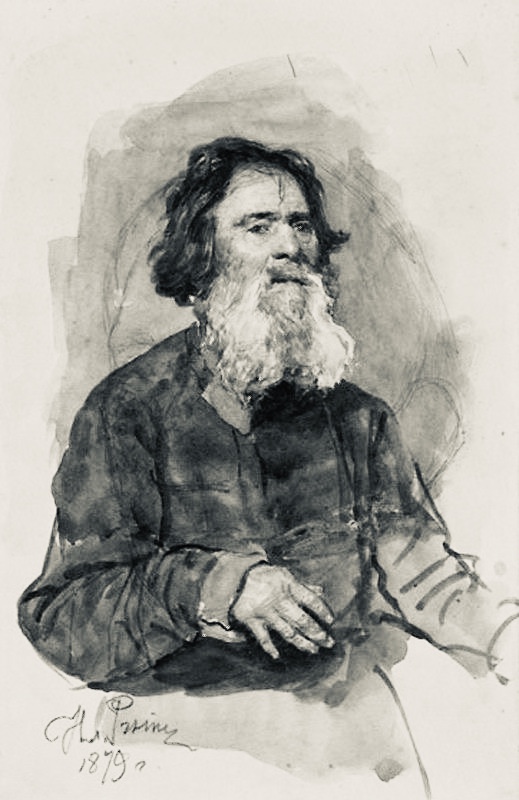
Altered image is “Self Portrait,” by Ilya Repin, 1887.

SITE DESIGNED BY PRETTYWILDTHINGS